
Menu
What to Know Before Pouring Concrete Slabs in Sierra Vista
Pouring Concrete Sierra Vista
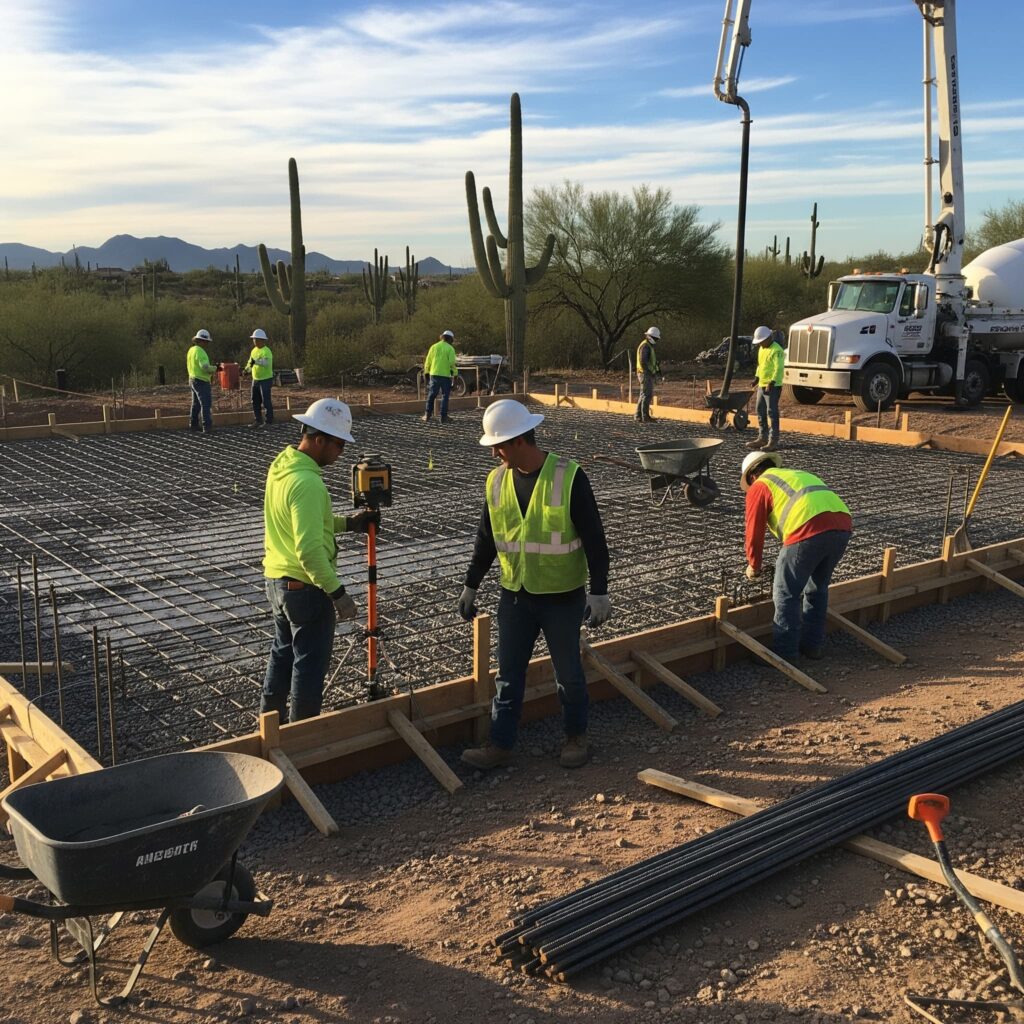
Successfully pouring concrete slabs in Sierra Vista requires understanding the many local aspects that can affect your project, including the local permitting requirements and the specific methods required to pour concrete in the desert climate. The extremes of temperature, expansive soils, and high UV radiation present problems for contractors when pouring concrete slabs that are difficult to solve without a great deal of knowledge and experience. By properly preparing the area where you will be pouring the slab before pouring it, you can prevent costly errors and ensure that your concrete slabs will last for decades and provide reliable service in the extreme conditions of Cochise County. All steps involved in a concrete project (site evaluation to cure) require consideration of local factors that are much different than those encountered in other areas of the country. This information will help property owners to make knowledgeable choices regarding their concrete projects and who they should hire as a contractor.
Sierra Vista’s Building Code Enforcement Requirements
Building Permits Required for Most Concrete Slab Installations
In general, the City of Sierra Vista requires building permits for virtually all concrete slab installations. While there are many exceptions to this rule, building permits are generally required for all concrete slab installations that exceed certain size limitations or have an intended structural function. Examples of projects that would be subject to the permitting requirement for concrete slab installation include: slabs for new or existing sheds; slabs for new or existing garages; slabs that are attached to a structure that will also house a new or existing dwelling unit; and slabs that will support any type of building or equipment.
CitizenServe is the city’s permitting platform where you can submit and track your permit application, as well as schedule inspections for your project. The Community Development Department at (520) 417-4413 can assist you with determining whether a particular project would be required to obtain a permit. Contractors typically take care of obtaining the necessary permits as part of their scope of work for a given project, and will make sure that all applicable local building codes and inspection requirements are met.
Soil Conditions and Site Evaluations
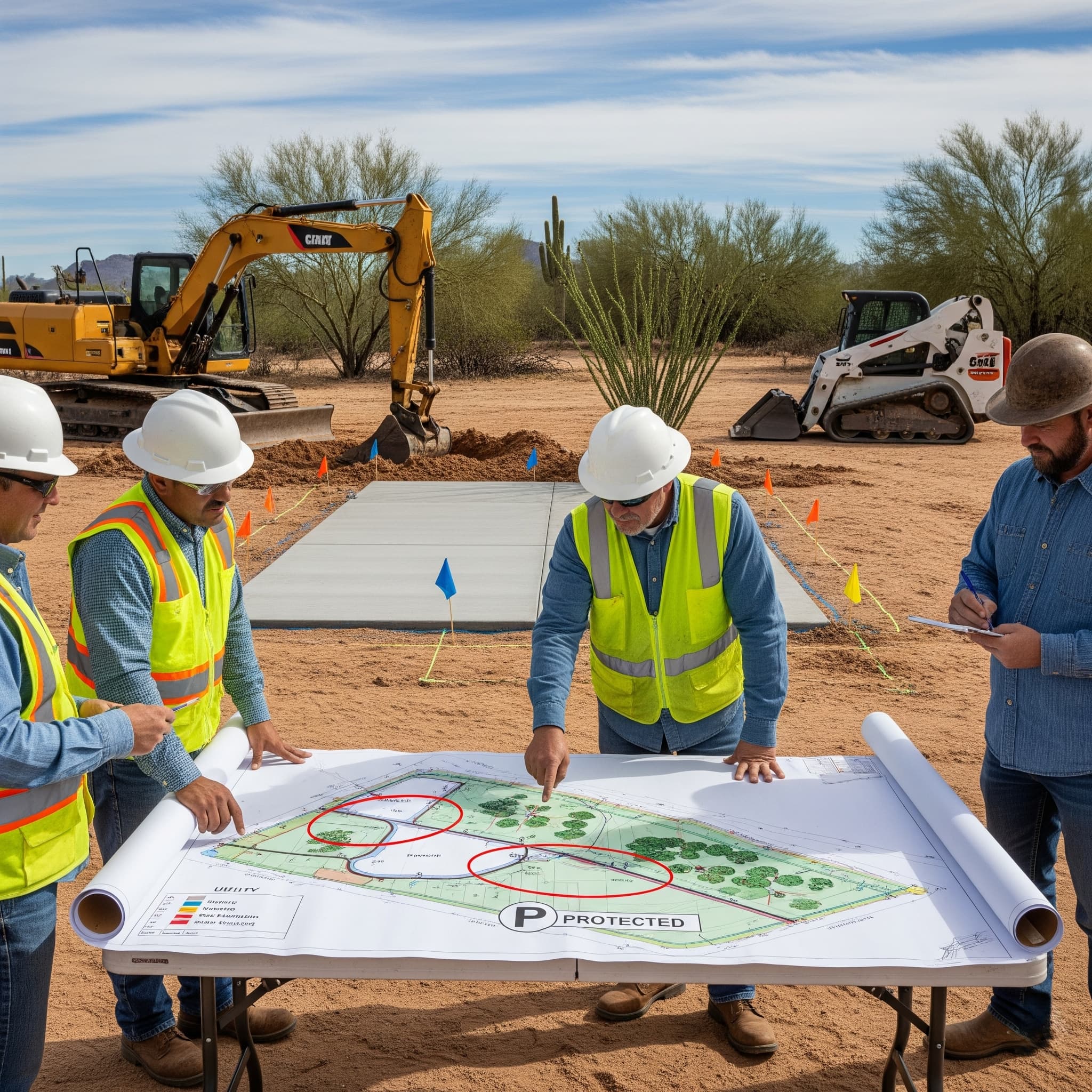
Due to Sierra Vista’s diverse geological conditions, it is important to perform a site-specific investigation prior to placing concrete on any site. The area surrounding the Huachuca Mountains has very different conditions from the valley floors, and therefore, each location must be evaluated separately. Because expansive clay soils are found throughout Cochise County, these soils will cause significant movement that will negatively affect the slab’s integrity over time. In addition to the expansive nature of the clay soils, rocky terrain, and caliche deposits present their own set of challenges regarding site preparation and equipment requirements. The evaluation process includes assessing the bearing capacity of the soil, its ability to drain, and what amendments or stabilizing methods are required to prepare the site. The professional site-evaluation process will also assess utility locations, drainage patterns, and other potential complicating factors that will ultimately affect both the budget and timeline of your project.
Weather Conditions and Timing
As a result of Arizona’s extreme climate, the timing of installing concrete slabs in Sierra Vista is critical for a successful pour. The best time to pour concrete in Sierra Vista is during the spring and fall months when temperatures remain between 50-85 degrees Fahrenheit, with moderate humidity levels. If you need to pour during the summer months, the best time is in the early morning hours between 4 and 8 AM. Pouring during this time-frame reduces the likelihood of the concrete experiencing excessive heat and losing moisture rapidly, resulting in poor curing of the concrete. Winter in Sierra Vista may experience some freezing temperatures that can hinder the development of concrete strength, and as such, may require specialized cold-weather techniques. Additionally, the monsoon season in Sierra Vista poses challenges to scheduling and the quality of the concrete due to the sudden changes in weather that can occur during this time period if not planned for properly.
Specialized Concrete Mix Designs for Extreme Desert Conditions
Desert concrete installations require specially developed mix designs that are capable of handling extreme temperature fluctuations and the rapid evaporation of moisture that occurs commonly in Sierra Vista. Air-entrained concrete prevents freeze-thaw damage that can occur in rare instances during the winter months, while still providing workable properties in extremely hot temperatures. Special admixtures, including set retarders, enable the contractor to control the rate of curing of the concrete in hot weather, while plasticizers allow the contractor to maintain the workability of the mixture without increasing the amount of water used in the mix design. Additionally, fiber reinforcement provides improved crack resistance to thermal expansion and soil movement that can occur as a result of the extreme climate conditions in Sierra Vista. Local concrete suppliers stock mixes specifically developed for the southwest region that far surpass standard mix designs that were not designed for extreme climates.
Best Practices for Site Preparation
Preparation of the site is one of the most important steps in completing a successful concrete slab installation in Sierra Vista. Removing all organic material, rock, and debris from the excavation area while achieving the correct depth for the base materials and the slab thickness is critical. Compacting the soil requires specialized equipment and techniques to attain the correct level of density without compacting the soil too much and causing drainage problems. Placement of the base materials using correctly graded gravel allows for a stable base while enabling drainage during the monsoon seasons. As necessary, the use of moisture barriers and vapor barriers in areas prone to groundwater will aid in maintaining the curing and long-term durability of the concrete.
Techniques Used During the Installation of Concrete in Hot Weather
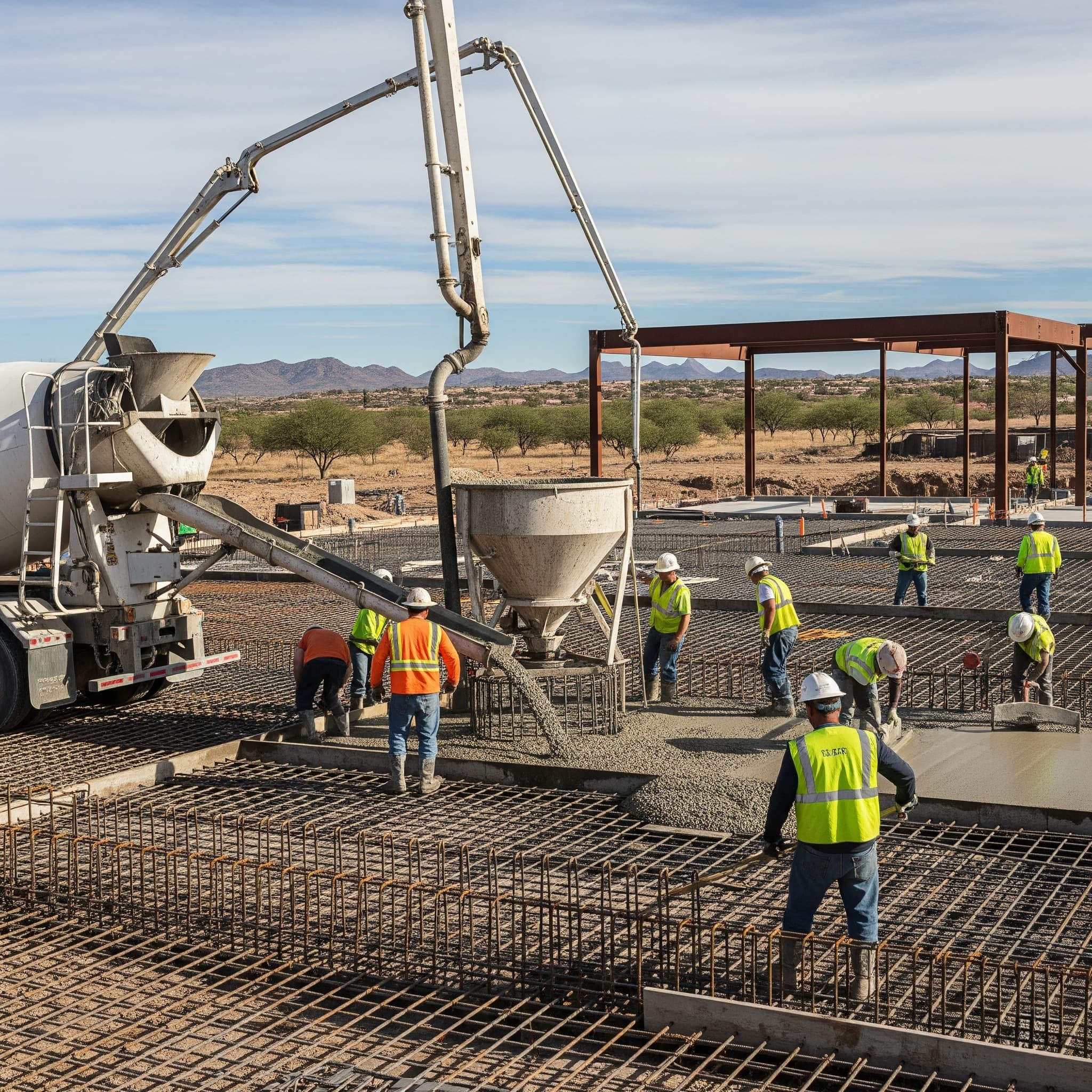
Pouring concrete in the extreme heat of the summer months in Sierra Vista requires specialized techniques to prevent the rapid loss of moisture and to ensure proper curing of the concrete. Wetting the sub-grade, forms, and reinforcement prior to placement of the fresh concrete prevents the moisture from being absorbed into the forms and reinforcement during the placement of the concrete. Cooling the concrete using chilled water and ice can lower the temperature of the concrete by 10-20 degrees, thereby improving the workability and extending the time available to finish the concrete. Applying evaporation retardants during the finishing phase will help to prevent plastic-shrinkage cracks that occur from the rapid drying of the surface of the concrete. Maintaining continuous curing of the concrete using wet burlap, curing compounds, or applying water continuously during the critical early stages of curing will assure the concrete is cured properly and achieves the desired strength.
Drainage and Water Management
During the monsoon seasons and occasionally during the winter months, Sierra Vista receives large amounts of rainwater that require proper drainage planning for the concrete slabs installed in the area. The site should be properly graded to direct the flow of water away from the slabs and to prevent erosion and undermining during heavy rainfall events. Installing French drains, surface drainage systems, and calculating the proper slopes to prevent standing water from accumulating under or near the slabs is essential to preventing heaving or settling of the slab. Areas located near natural washes or drainage corridors require additional drainage measures to handle flash-flood conditions. Understanding the local drainage patterns will help identify potential problem areas and allow for preventative measures to be taken during the initial construction phase.
Structural Reinforcement and Load Requirements
Most concrete slabs in Sierra Vista require some form of reinforcement to accommodate the thermal stresses, soil movements, and load requirements associated with Arizona conditions. Wire-mesh reinforcement provides distributed crack control, whereas rebar provides structural strength for load-bearing applications. Fiber reinforcement provides additional crack resistance against thermal expansion and soil settlement, which are common issues in desert environments. To ensure that the reinforcement is properly placed, it must be centrally located within the slab thickness, and sufficient cover must be maintained to protect the reinforcement. Understanding the load requirements, soil conditions, and intended use of the slab will help determine the proper reinforcement specifications.
Desert Curing Requirements
Arizona’s low humidity and extreme heat create unique curing challenges that require specialized approaches for the optimal development of concrete strength. The first 48-72 hours after placement of the concrete are the most critical curing period because the rapid loss of moisture can significantly decrease the final strength and durability of the concrete. Maintaining continuous moisture availability to the concrete through wet curing, membrane-forming compounds, or controlled environments will ensure that the hydration process is completed properly. Maintaining proper temperature control will also prevent excessive heat build-up in the concrete, which can weaken the structural integrity of the concrete and create thermal-stress cracks. Proper curing techniques can improve the strength of the concrete by 30-50 percent compared to improper curing in desert environments.
Quality Assurance and Quality Control Measures
All professional concrete installations in Sierra Vista include quality-assurance and quality-control measures to ensure that the finished product meets the specifications and local building codes. Before beginning the placement of the concrete, slump tests are performed to ensure that the consistency and workability of the concrete are satisfactory. The temperature of the concrete is monitored to ensure that the concrete does not get too warm during hot-weather pours. At 7 and 28 days, cylinder samples are taken to determine the compressive strength of the concrete to ensure that the finished product meets the specifications of the job. During the placement of the concrete, visual inspections are performed to identify any problems that need to be addressed immediately. Through proper quality-assurance and quality-control measures, problems that could lead to expensive repair or even the need to replace the entire slab can be identified and corrected before the placement of the concrete.
Factors Affecting Cost and Budget Planning
The cost to install a concrete slab in Sierra Vista can vary greatly depending on the complexity of the project. The cost for a standard concrete slab installation can range from $7 to $12 per square foot. Depending on how complex the project is, additional costs can range from $2 to $5 per square foot. The cost of site preparation, accessibility, and the condition of the soil will greatly impact the overall cost of the project beyond the cost of the concrete and labor. Additional costs can include permit fees, relocation of utilities, and improvements to drainage. Additionally, the installation of a concrete slab during the hot summer months may require additional materials and techniques that can increase the overall cost of the project. Professional contractors will provide detailed estimates that will include all of the necessary components to complete the project successfully.
DIY vs. Professional Concrete Slab Installation
While a simple concrete slab installation may appear to be a candidate for a DIY installation, the extreme conditions in Sierra Vista may require professional expertise to produce an optimal result. Professional contractors are knowledgeable about the conditions in Sierra Vista, including the various soil conditions, the climatic challenges, and the local building codes that influence the success of a concrete slab installation. Professional contractors have access to specialized equipment and materials that provide a higher degree of quality assurance and will provide a warranty and insurance protection for the installation. Due to the complexity of the concrete installation process in extreme desert environments, the cost-savings achieved by hiring a professional contractor may outweigh the expense of the installation.
Professional Concrete Slab Installation by Sierra Vista Concrete Works
To successfully pour concrete slabs in Sierra Vista, it is essential to possess a comprehensive knowledge of the local conditions, regulations, and specialized techniques unique to Arizona’s desert environment. Our staff will provide full-service project management, from the site-specific evaluation to the final inspection, to ensure that all elements of the project meet the local requirements and performance expectations. We specialize in addressing the extreme climatic conditions of Sierra Vista while producing concrete slabs that provide decades of reliability and service. Sierra Vista Concrete Works combines local expertise with proven techniques to pour concrete that is resistant to the extreme environmental challenges we face locally and will protect your investment through the use of professional installation and quality materials designed for desert environments.
LATEST POSTS