
Menu
Floating vs Monolithic Slabs: Which Fits Your Sierra Vista Project?
Concrete Slab Sierra Vista
The ultimate decision to choose a floating or monolithic concrete slab foundation will determine how much money you spend on a project, and ultimately, how well it holds up for many years in this special part of Sierra Vista. Once a homeowner knows what they are looking at with the two main foundation options, they can use their knowledge of soils, needs of the project, and their budget to make an educated decision regarding the best option for them. A homeowner has to consider the local climate, extreme temperatures, and unique characteristics of the soils in Arizona when deciding on a foundation type for their specific project application. Furthermore, local building codes, utility requirements, and local seasonal weather conditions also play into the decision for residential or commercial development. A professional assessment will ensure that your selected foundation type offers the most value and structural integrity for years to come.
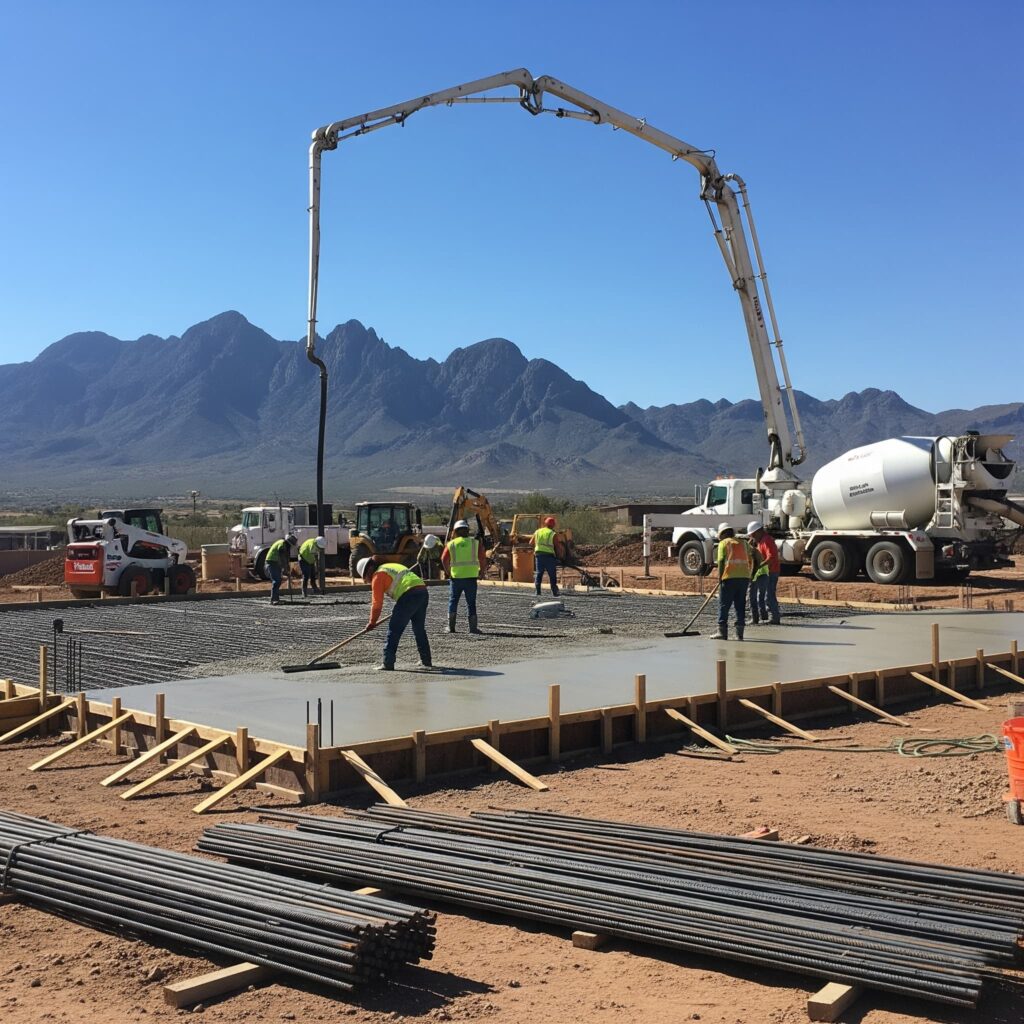
Understanding Floating Concrete Slab Foundations
The floating slab foundation sits directly on prepared soil and does not have deep footings; therefore, it “floats” on the top surface of the ground, similar to a large concrete pad. The floating slab foundation relies on correctly compacted soil and reinforcing materials to distribute the structural loads to a wider area of the surface of the slab. Typically, floating slabs have thicker edges than the center of the slab for added strength, and some insulating products can be placed inside the slab to reduce thermal expansion and contraction of the slab material as the temperature fluctuates. The advantage of this type of foundation is that very little excavation work is done; therefore, it is usually less expensive than other foundation types. However, the floating slab foundation depends greatly on the soil’s ability to support the weight of the slab and adequate drainage to prevent settling and/or moving of the slab at some point in the future.
Examining Monolithic Slab Construction
Monolithic slabs integrate the foundation footing and floor slab into one continuous pour to produce a single structural element. A monolithic slab will contain a thicker edge at the perimeter of the slab that extends beyond the frost line, which produces a more stable structure than a floating slab. Because the monolithic slab combines the footing and slab into one pour, the construction time is reduced by eliminating the two-step process of first constructing the footing and then the slab. In addition, the monolithic slab creates structural connections throughout the slab. Although monolithic slabs require larger site preparation and more formwork, they offer improved load-carrying capacity compared to floating slabs. Monolithic slabs generally perform better in difficult soil conditions and/or where high structural integrity is required.
Soil Conditions in Sierra Vista and Selecting a Suitable Foundation Type
The varied soil conditions within Sierra Vista can significantly affect the performance of a foundation and the type of foundation selected for a given location. For example, locations closer to the Huachuca Mountains have different soil conditions than those located in the lower valley area. Additionally, expansive clay soils are widespread throughout Cochise County and can result in considerable displacement of the foundation, resulting in loss of foundation stability. Locations with rocky terrain, such as Fort Huachuca or Garden Canyon, may require specialized excavation methods, which can limit the options for selecting a suitable foundation type. Locations with stable, draining soils typically perform best using floating slabs, whereas locations with unstable, expansive soils will likely perform best using a monolithic foundation type. Therefore, conducting a professional soil investigation before designing the foundation will assist in determining the most suitable type of foundation to select for the given site.
Evaluating Cost and Budget Considerations
Typically, the cost of a floating slab ranges from $6–$11 per square foot in Sierra Vista, whereas the cost of a monolithic slab ranges from $8–$15 per square foot, depending upon the complexity of the site and the amount of labor involved in constructing the slab. Material costs for floating slabs are less than for monolithic slabs because the thickness of the slab material is much less. Labor costs vary based on the amount of site preparation needed for the foundation installation; however, monolithic slabs require much more extensive formwork and skilled installation to complete the installation. Depending upon the complexity of the job and the number of specialized tools needed, equipment costs may also vary for floating slabs (i.e., simpler installations) versus monolithic slabs (i.e., more complex installations). When evaluating the long-term value of a foundation, the durability, maintenance requirements, and potential repair costs over the foundation’s lifespan should all be considered.
Climate Considerations for Arizona Projects
Extreme temperature fluctuations in Arizona affect the performance of various foundation types in Sierra Vista. Due to the daily temperature fluctuations, the concrete will expand and contract to varying degrees, affecting different types of foundations. The intense UV radiation in Arizona affects the surface of the concrete differently for floating versus monolithic installations. The monsoon season presents moisture problems for drainage systems and soil stability surrounding the perimeter of the foundation. Although rare in Sierra Vista, winter freezing temperatures can affect shallow foundations more than the deeper monolithic installations. Therefore, when designing a foundation for a Sierra Vista project, the climate conditions must be accounted for to ensure long-term performance of the foundation.
Applying the Correct Foundation for Specific Uses
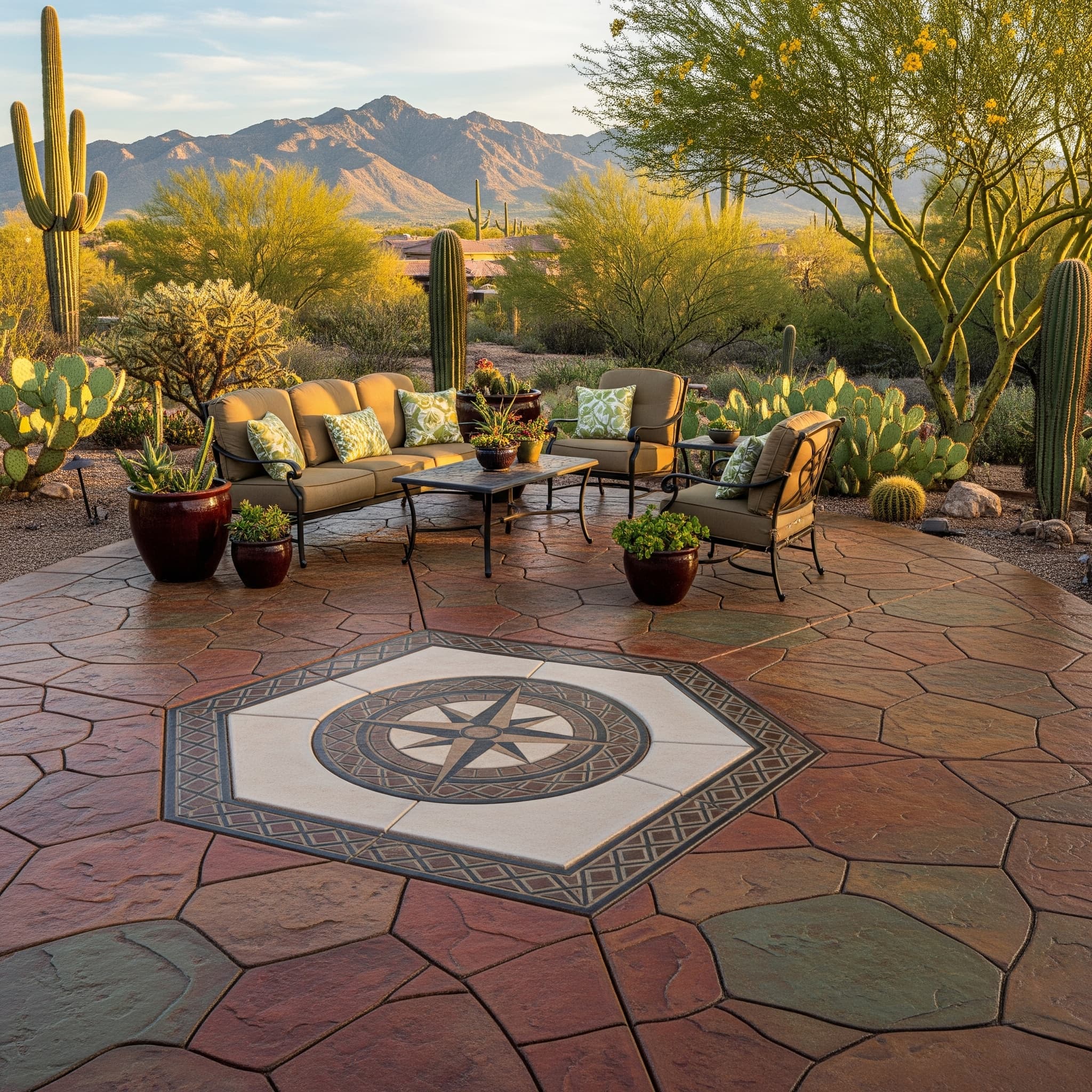
Floating slabs are ideal for garages, workshops, storage buildings, and other uses where cost-effectiveness and quick installation are desired. Small residential patios, sidewalks, and small commercial buildings are typical examples of structures that would benefit from the use of floating slab construction if the soil conditions allow for such a use. Monolithic foundations are more suitable for permanent structures, homes, and buildings that require maximum stability and load-carrying capacity. Large equipment installations, multi-story construction, and other critical infrastructure typically require the use of monolithic foundation systems. Based on the specific application and the load requirements, the correct type of foundation to apply can be determined.
Differences in Installation Processes and Timelines
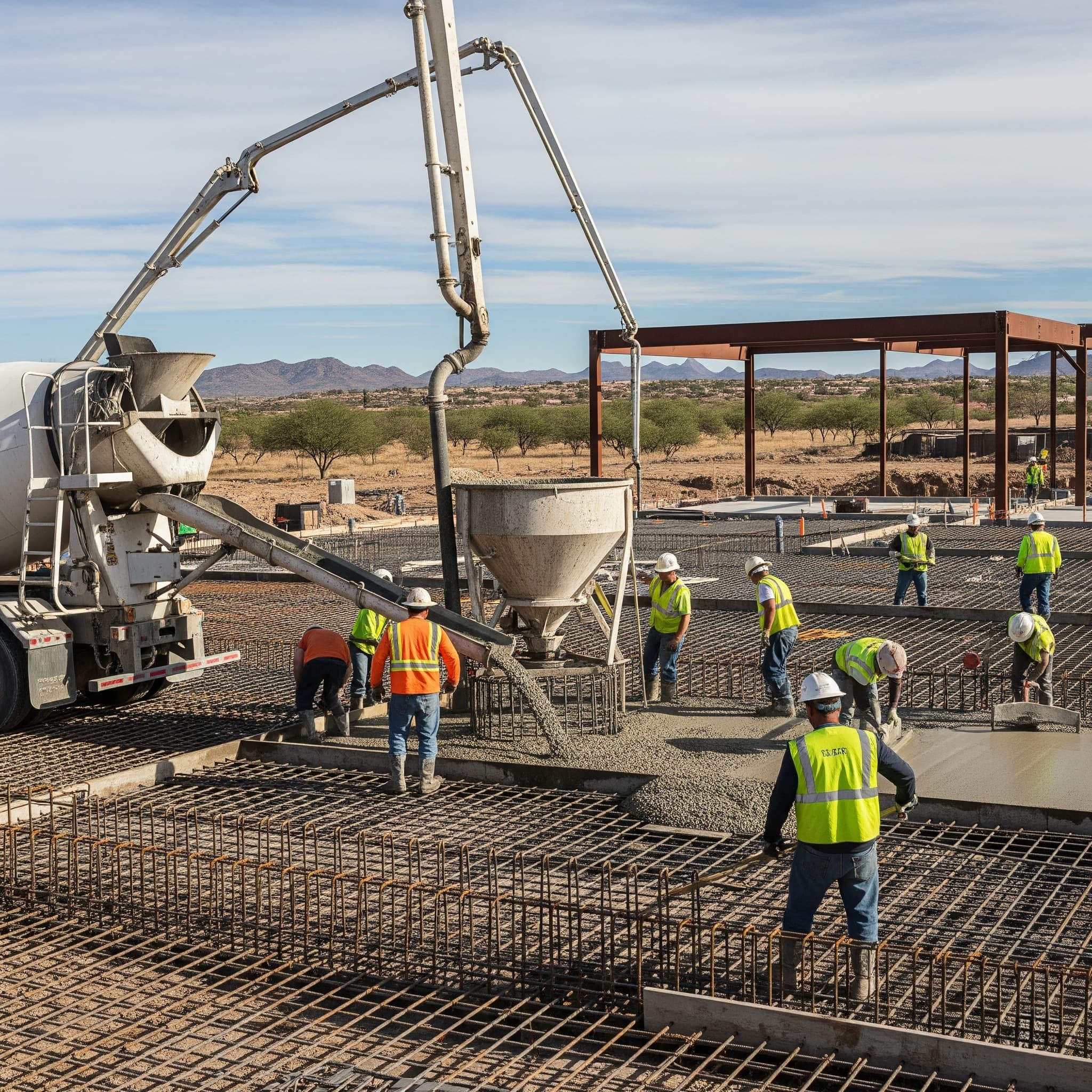
The installation process for a floating slab typically takes 3–7 days from site preparation to the final cure of the concrete, depending upon the size of the project and weather conditions. Site preparation for a floating slab consists of basic grading, compaction, and utility rough-in before placing the concrete. The installation process for a monolithic slab typically takes longer than for a floating slab and can take up to 7–14 days due to the extensive formwork requirements and deeper excavation needs for the footing system. The entire footing system is constructed at once, requiring coordination of the placement of the reinforcing steel and the pouring sequence of the concrete. Weather conditions can delay both types of foundation installations; however, monolithic installations tend to have a more complex scheduling requirement.
Factors That Determine Performance and Durability
When properly installed, floating slabs can provide 20–30 years of satisfactory service, provided the soil conditions remain stable and the drainage system functions properly. As previously stated, settlement risk increases when the underlying soil conditions change or when insufficient site preparation is performed during the installation of the slab. Monolithic slabs generally provide 30–50 years of service life due to the integrated design of the footing and slab and the deeper foundation elements. The structural integrity of the monolithic slab remains superior to that of the floating slab, especially when subjected to movement of the soil or significant changes in loads applied to the slab. Regardless of the type of foundation used, both will require maintenance, sealing, and proper management of drainage systems to achieve maximum lifespan in Arizona’s harsh climate.
Integration of Utilities and Access Considerations
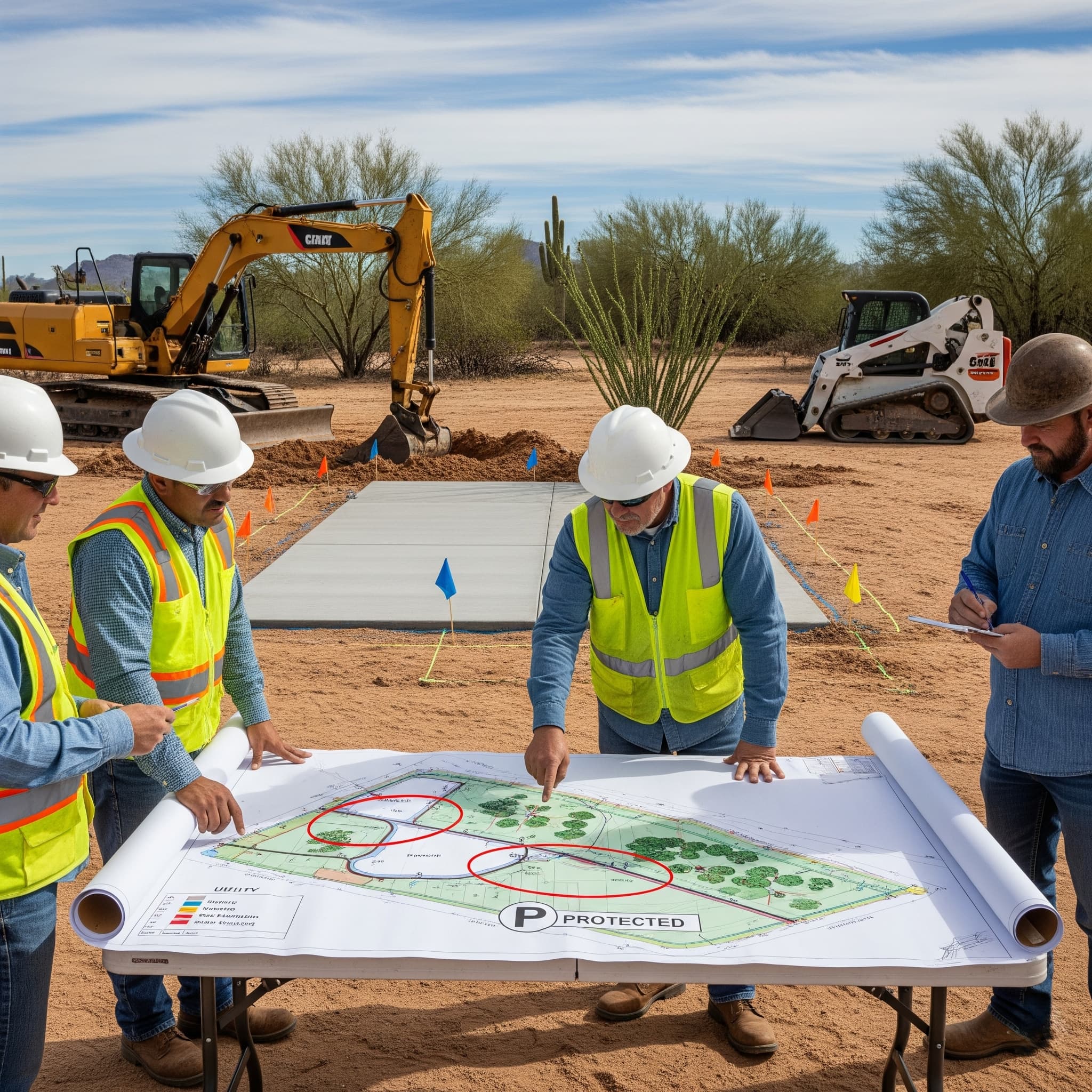
Since the pipes and conduits for utilities are normally placed under the thinner slab portion, floating slabs provide easier access for modifying/repairing utilities after the slab has been completed. Subsequent modification of utilities post-construction is generally less expensive and less complicated than with monolithic slabs. Utility modification and repairs in monolithic slabs require more caution, since modifications necessitate cutting through the thicker reinforced concrete. Coordination of electrical, plumbing, and heating, ventilation, and air conditioning (HVAC) systems must occur carefully during monolithic slab construction to minimize difficulties associated with accessing them in the future. While neither type of slab offers perfect access to utilities, integrating proper sleeves and planning during initial construction can facilitate future utility needs.
Code Requirements and Permit Costs in Sierra Vista
Building codes in Sierra Vista define minimum requirements for foundations based on the type of structure being built, the type of occupancy, and the determination of the soil conditions made by a qualified engineer. There may be restrictions on the use of floating slabs for particular applications or the use of engineered designs when the soil conditions indicate additional analysis is necessary. Monolithic foundations generally satisfy the building code requirements for the majority of residential and commercial applications without the need for special considerations. The costs associated with obtaining permits vary based on the type of foundation selected and the complexity of the project. Monolithic slabs may require additional engineering documentation to obtain permits, which can increase the cost of permitting. Professional contractors who specialize in concrete work are familiar with the local building codes and assist in navigating the permitting process for either foundation type.
Choosing the Best Option for Your Project
Foundations are selected on a case-by-case basis by evaluating the soil conditions, project requirements, budgetary limitations, and long-term expectations for performance of the foundation. If the site has stable soil, moderate loads, and a limited budget, floating slabs are often the preferred choice for construction. If the project requires the highest level of durability, a large amount of load support, or difficult soil conditions, monolithic foundation systems are typically the preferred option. A comprehensive evaluation by a qualified engineer, including a soil investigation, structural analysis, and a cost/benefit analysis, will assist in selecting the most suitable type of foundation for a given site. Additional factors that influence the selection process include consideration of climate, utility requirements, and local building codes.
Expert Foundation Evaluation by Sierra Vista Concrete Works
Determining the best concrete slab foundation for a Sierra Vista project requires knowledge of the local soil conditions, building codes, and construction practices applicable to Sierra Vista’s arid climate. Our team evaluates the site conditions, project requirements, and budgetary considerations to determine the best type of foundation for a given project. Our team understands the differences in performance of floating and monolithic slabs in Arizona’s desert climate and assists our clients in making an informed decision regarding the type of foundation to select for their project. Sierra Vista Concrete Works provides professional installation services for both floating and monolithic slab foundations to assure the successful completion of our clients’ projects.
LATEST POSTS