
Menu
Signs Your Sierra Vista Home Needs Concrete Foundation Repair
Concrete Foundation Repair Sierra Vista
Recognizing potential early warning signs of possible foundation problems will help Sierra Vista homeowners avoid unnecessary, costly repairs and prevent serious structural damage to their homes. The extreme temperature variations in Arizona, combined with expansive clay soil, create some unique environmental factors that are often recognized by visible signs and symptoms within your home. By recognizing these signs, you can identify whether you have a house that is normally settling or experiencing serious foundational issues, which may require professional assistance immediately. Identifying a problem early on will allow for minor problems to be corrected before they become a major structural failure that could compromise the safety of your home and its value. A professional evaluation will provide an accurate diagnosis and cost-effective remedies that will address the specific environmental challenges of Sierra Vista.
Visible Cracks in Foundation Walls and Slabs
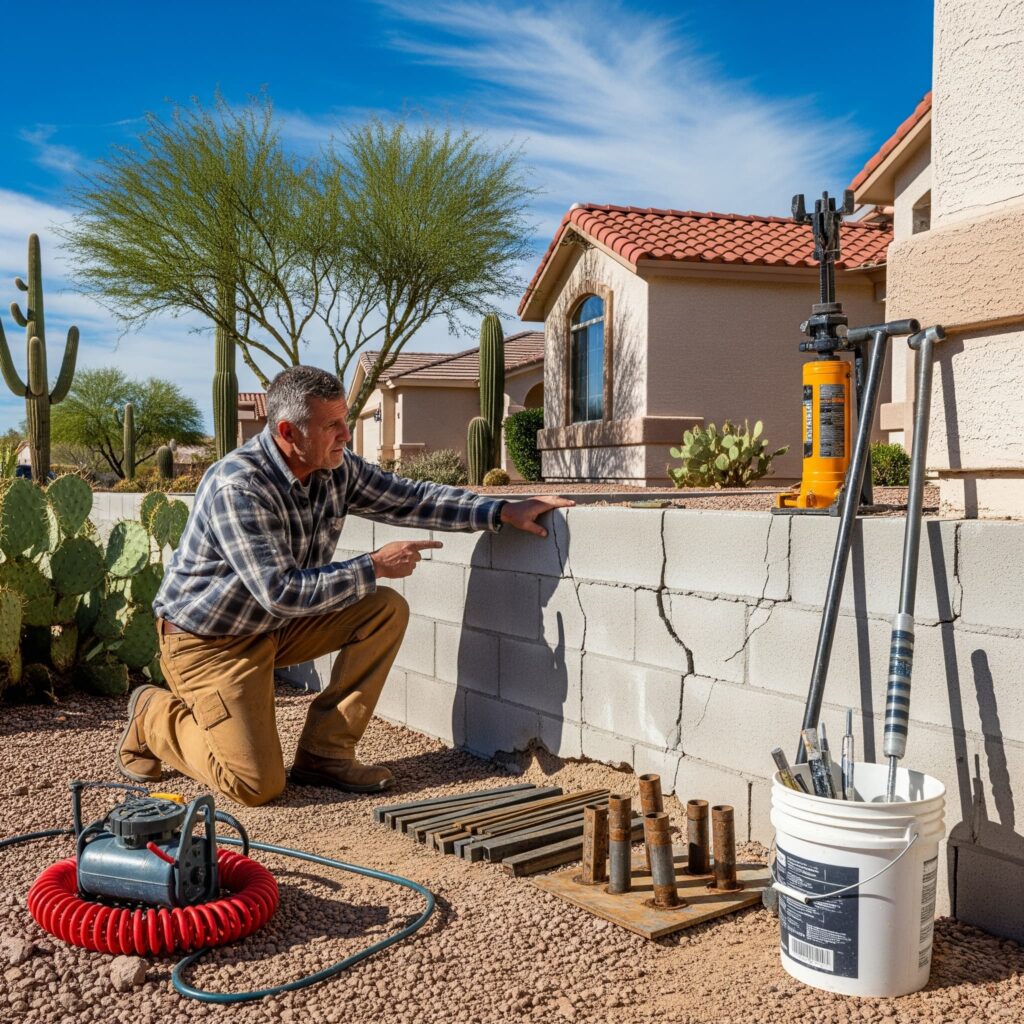
Cracks in foundation walls and slabs are one of the most obvious signs of structural distress; however, not all cracks signify serious structural issues. Hairline cracks that are less than 1/8″ in width generally indicate normal settling, particularly in new homes under two years of age. Cracks greater than 1/4″, horizontal cracks, or stair-step type patterns in block walls typically signify significant foundation movement requiring professional evaluation. As previously discussed, cracks that grow larger over time, display evidence of moisture intrusion into the crack, or demonstrate varying widths at the edges of the crack typically signify active structural distress. Sierra Vista’s clay soils and extreme temperatures contribute to both settlement and heaving cracks that occur on a regular basis in concrete slabs and foundation walls.
Problems with Interior Flooring and Tile Damage
Many times, it is not until interior floor issues manifest themselves that homeowners become aware of the fact that they are experiencing some type of foundation movement within their Sierra Vista home. The most common example of this would be cracked tile, particularly if the cracks occurred in a pattern consistent with the layout of the foundation beneath the home. Cracking in tile is generally caused by the slab moving due to either settlement or heaving. Floors that “feel uneven,” display gaps between the tiles, or show vertical displacement, generally signify that there is foundation movement occurring somewhere within the home. While hardwood floors that cupping, warping, or developing gaps in the flooring can be indicative of foundation movement, changes in moisture levels can also be responsible for many of these same symptoms. Separation or cracking of the area where the floors meet the walls generally signifies some type of differential foundation movement and should be evaluated by a qualified professional.
Operational Problems with Doors and Windows
In addition to the above-mentioned examples, sticking doors and windows often are the first sign of foundation movement in Sierra Vista homes prior to the appearance of visible cracks in the walls and/or floors. When doors will no longer operate properly (either suddenly or gradually) and require excessive effort to open and/or close, or when there are gaps present between the frame of the door/window and the surrounding structure, some type of structural shifting has likely taken place. Similarly, if windows do not function properly (i.e., bind, will not remain open, etc.), or if there are gaps evident in the frames of the windows, it is also probable that some degree of foundation movement has occurred. Additionally, diagonal cracks appearing in the door and window frames (particularly at the corners of the openings) are generally indicative of settlement or heaving of the foundation. It is also worth noting that the operating characteristics of doors and windows often change during the course of each heating and cooling season as the foundation shifts and settles.
Patterns of Cracks in Walls and Ceilings
The patterns of cracks that appear in walls and ceilings provide important clues regarding the nature and extent of foundation problems associated with Sierra Vista homes. In general, diagonal cracks extending from the corners of doors and windows are indicative of differential settlement and subsequent structural stress. Generally speaking, horizontal cracks that run across the joints of walls and ceilings are indicative of significant foundation movement that should receive prompt attention. Although vertical cracks in walls are generally less alarming than horizontal cracks, vertical cracks in walls can be indicative of foundation settlement, particularly if other symptoms are evident.
Signs of Foundation Heaving and Settlement
[Image comparing foundation settlement versus foundation heaving with arrows showing direction of soil pressure]
As previously discussed, the expansive properties of Arizona’s clay soils can cause unique patterns of movement in foundations that are commonly found in Sierra Vista homes. Specifically, foundation heaving occurs when water causes the soil to expand, resulting in upward pressure being placed on floors and foundations, thereby producing distinctive crack patterns. Conversely, foundation settlement occurs when water loss or inadequate compaction of the soil permits the foundation to settle downward, thus creating a variety of symptoms that can be potentially just as damaging as those experienced with heaving. Heaving generally produces an upward movement of the floors with radial cracks emanating from the highest point(s). Settlement, on the other hand, tends to produce downward movement of the floors with cracks radiating outward from the area(s) that settled.
Warning Signs of Moisture Problems
Moisture infiltration into the foundation of a Sierra Vista home presents a host of serious problems that can progressively worsen over time in the hot, dry climate of southern Arizona. Stains caused by water seepage into the walls of a basement or crawl space, efflorescence (white mineral deposits), or dampness in areas of the walls near the foundation are all potential indicators of moisture-related structural and maintenance problems. Excessive humidity in basements or crawl spaces, musty odors, or the presence of mold growing in areas where cracks allow moisture to enter, all indicate the presence of cracks in the foundation that are permitting moisture to enter the home. Additionally, standing water that accumulates near the foundation of a home during the summer monsoon season can both immediately and eventually cause structural damage to the foundation of the home.
Additional Exterior Indicators and Drainage Problems
Generally, exterior indicators of foundation problems are apparent to homeowners before internal symptoms are noticeable. Gaps that exist between the foundation of a home and adjacent concrete surfaces (such as driveways, sidewalks, patios, or sidewalls) generally signify differential movement in the foundation. If the walls of a home are bulging or bowing, this generally signifies a serious structural problem that requires immediate attention. Also, if landscaping that surrounds a home is pulling away from the foundation of the home, or if exterior surfaces of a home are settling unevenly, or if there are changes in drainage patterns around the home, these are all potential indicators of possible foundation problems. Proper grading of the land and directing water away from the foundation of the home are critical to prevent moisture-related foundation problems.
Utility System-Related Symptoms
Foundation movement can also impact the operation of plumbing and utility systems within a home, creating secondary symptoms that homeowners may experience. For instance, slab leaks, increases in water consumption that cannot be explained, or random wet spots on the floors may be indicative of cracks in the foundation through which plumbing lines have been damaged. Similarly, gas-line problems, electrical-system malfunctions, or damage to the heating and air conditioning (HVAC) ductwork can be caused by the settlement or heaving of the foundation. Finally, sewer-line backup or drainage problems may be the result of the foundation movement affecting the connection of utilities to the home. As a result, utility-related symptoms are frequently accompanied by the need for a foundation evaluation and repair of the affected utility systems.
Seasonal Movement Patterns
The climate of Sierra Vista produces seasonal movement patterns in foundations that are typical of many of the homes located in this region. During the summer months, the increased heat can cause drying of the soil, which may lead to settlement of the foundation. On the other hand, the winter months can lead to heaving of the foundation due to increased moisture in the soil. The monsoon season brings rapid fluctuations in soil moisture that can cause immediate movement of the foundation and related symptoms. Doors and windows may function better or worse depending on the season and may be more problematic during the peak movement period of the year. By understanding the typical seasonal patterns of foundation movement, homeowners can differentiate between normal settling and progressive foundation problems that require corrective action.
Timing of a Professional Foundation Evaluation
Certain patterns of symptoms indicatehe need for a professional foundation-repair evaluation to mitigate further damage to the home. Some of the most telling examples of this include simultaneous development of multiple cracks, rapid expansion of existing cracks, or rapid onset of additional symptoms that were previously absent. Widespread foundation problems indicated by structural symptoms that affect doors, windows, and floors throughout the home generally indicate a need for a complete evaluation of the home’s foundation. Any safety concerns regarding the structural integrity of a home, such as severely uneven floors, major wall cracks, or obvious structural instability, require immediate professional assistance. A professional evaluation early in the process of foundation deterioration will assist in providing a proper diagnosis and help prevent costly structural damage.
Cost Considerations Associated with Postponing Repairs
Delaying foundation repairs when initial symptoms become apparent typically results in exponentially higher costs as the original problems progress. Costs of performing simple crack sealing and preventive procedures are significantly lower than the cost of performing major structural repairs that are necessary once severe damage to the home has developed. Problems with the foundation of a home that affect several other systems of the home often result in a series of secondary damage to the flooring, walls, plumbing, and other components of the home. Early intervention by a qualified professional can often prevent secondary damage to the home. A professional evaluation can assist in determining whether immediate repairs or monitoring are the best options based on the specific circumstances.
Professional Foundation Assessment with Sierra Vista Concrete Works
Accurate diagnoses of foundation problems require an expert in Arizona’s unique soil conditions, climate factors, and construction methods used in the construction of homes in Sierra Vista. Our staff performs thorough evaluations of homes, identifying all contributing factors and recommending the proper solution for the immediate problems and future prevention. We know the effects of local environmental conditions on different types of foundations and can differentiate between normal settling of the home’s foundation and serious structural problems. Sierra Vista Concrete Works is a professional provider of concrete foundation repair services that correct the root cause of the problem while providing a long-lasting solution tailored to the challenging desert environment and local building codes and regulations.
LATEST POSTS