Why the Soil Matters in Sierra Vista
Understanding how the soil beneath you behaves is important in making sure your foundation will be stable and durable:
- Sandy Soil – Sandy soil is very common in Sierra Vista and has great drainage; however, it can also settle and move over time.
- Clay Pockets – Clay can swell when wet, which means if there are clay pockets within your soil, you could experience shifting.
- Hard Layers of Caliche – Caliche is a hard layer of calcium carbonate that can require specialized equipment to drill into.
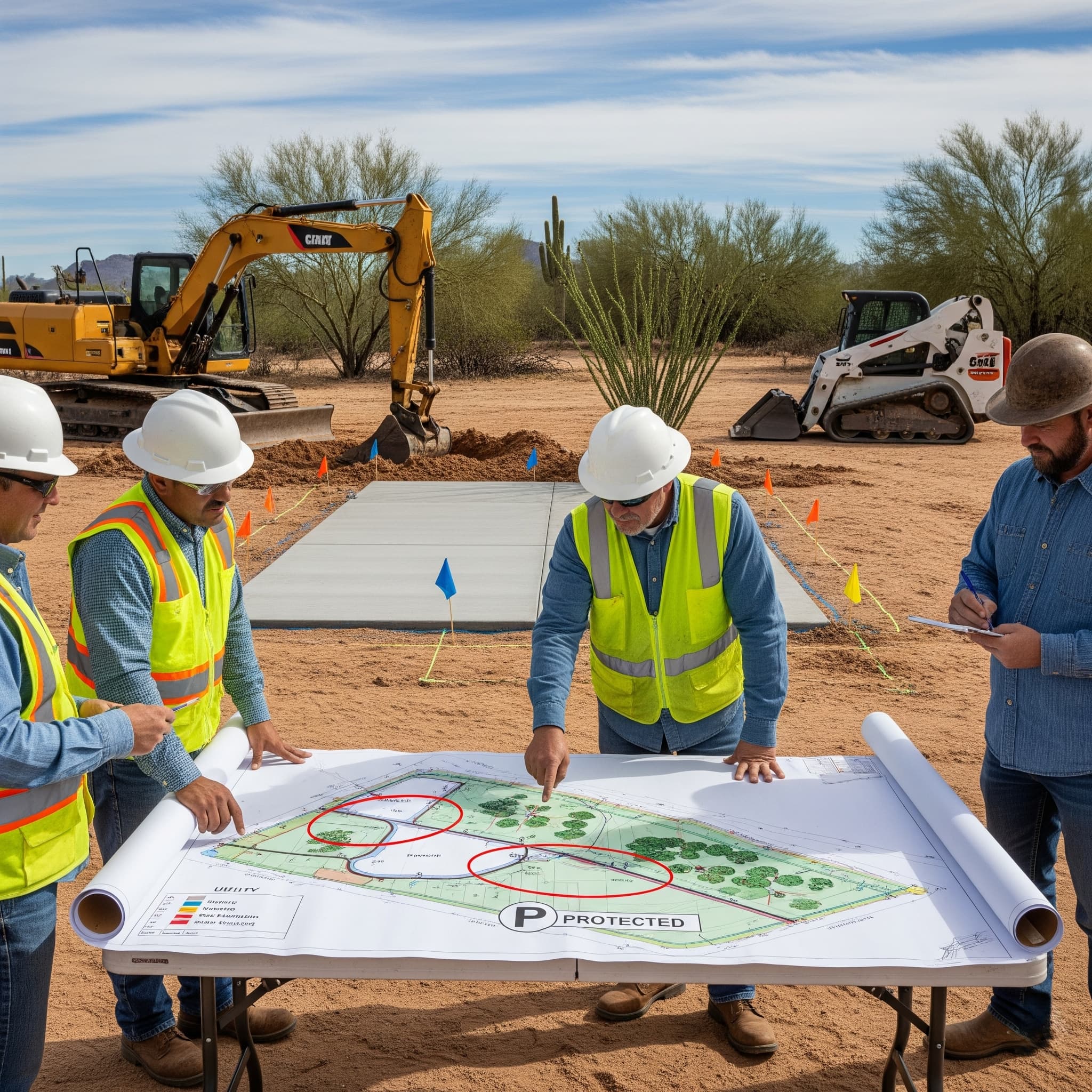
We always run soil tests before we begin designing your foundation so that we have a clear understanding of what we’re working with.
The Climate Affects the Concrete in Sierra Vista
Your climate can affect the way your concrete performs in several ways:
- Dry Hot Weather – Rapid drying of concrete is a problem in hot weather.
- Heavy Rains – The occasional heavy rain can result in erosion or swelling of the soil.
- Mild Winters – Deep frost-lines are less likely in our mild winters.
Our mixture designs and curing procedures consider all this.
Common Types of Foundations Used in Sierra Vista
1. Slab-on-Grade
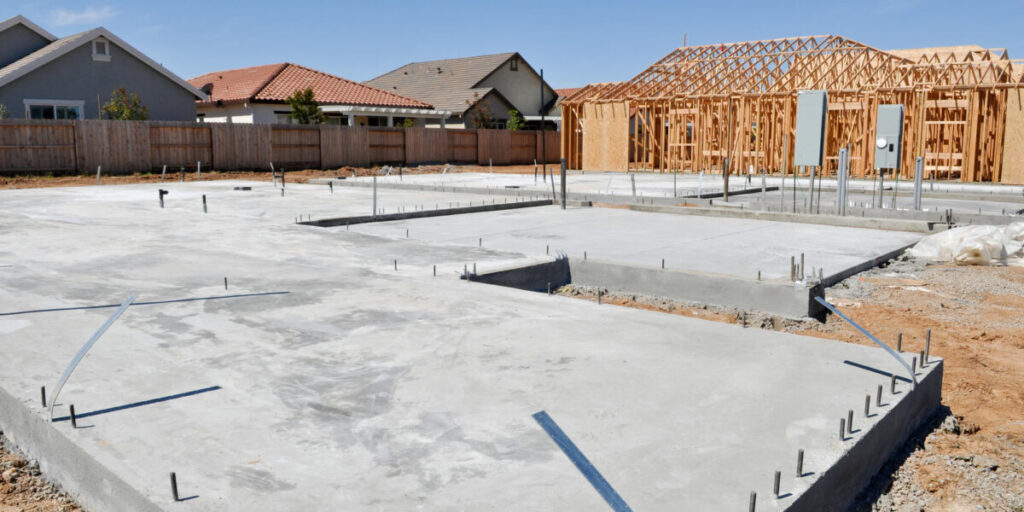
This type of foundation is most commonly used in our area and is cost-effective and easy to complete. This is a good option for our mild climate.
2. Stem-Wall Foundations
Stem-wall foundations provide additional vertical space and are useful in areas of potential flooding.
3. Pier & Beam Foundations
Pier & beam foundations are ideal for sloping land. They allow for access underneath your house as well.
4. Basement Foundations
Basements are less common than other types of foundations, but they are available in Sierra Vista. Basements provide an additional living space and are ideal for people who want to add to their home.
Key Elements of a High-Quality Foundation
1. Preparing Your Site Properly
Grading and clearing of debris from your site, and compacting the soil.
2. Strengthening Your Foundation
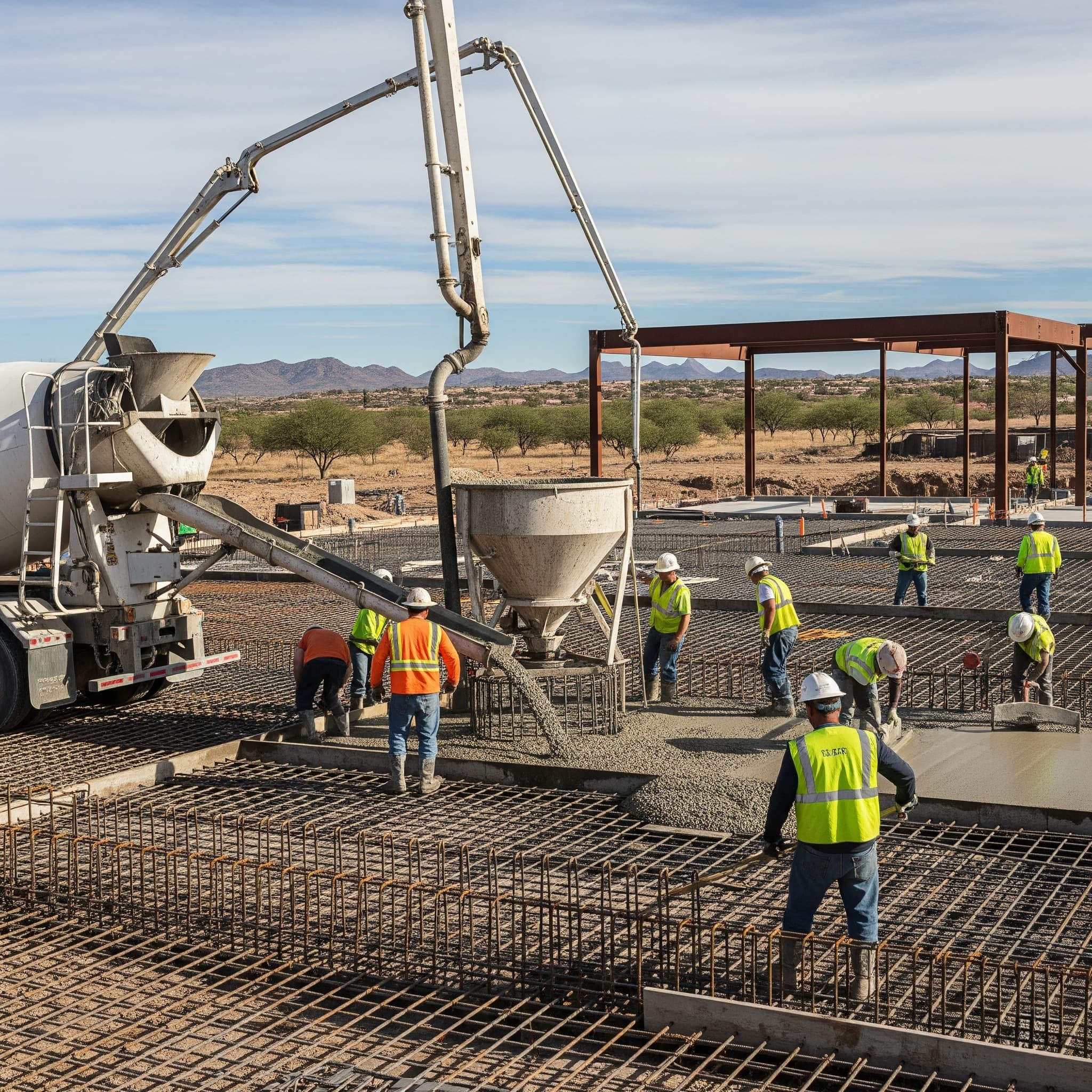
Adding rebar to add strength to your foundation and wire mesh to prevent cracks.
3. Adding a Vapor Barrier
Installing a vapor barrier to keep moisture out of your concrete.
4. Installing Expansion Joints
Installing expansion joints to allow for normal movement and contraction of the concrete.
5. Using a Quality Concrete Mix
Use a quality concrete mix designed for the climate and soil conditions in your area.
New Innovations in Foundation Technology
1. Post-Tensioned Slabs
Post-tensioned slabs reduce cracking in expansive soils.
2. Insulated Concrete Forms (ICF)
ICFs provide high levels of insulation.
3. Self-Consolidating Concrete
Self-consolidating concrete is ideal for complex-shaped foundations.
Energy Efficiency and Your Foundation
Concrete provides thermal mass to help regulate interior temperatures.
Proper insulation around the perimeter of the foundation walls will greatly reduce energy consumption.
Radiant floor heating systems can be integrated with your new home to further increase energy efficiency.
Waterproofing and Draining Water
While Sierra Vista does not get much precipitation, proper waterproofing is still essential:
- Installing French drains where needed
- Applying waterproof membranes
- Ensure your yard slopes properly to drain water away from your foundation.
Foundation Maintenance to Extend the Life of Your Foundation
Regularly inspect your foundation for any signs of cracks or settling.
Keep the soil consistently moist around your foundation.
Identify any drainage problems right away.
Here at Sierra Vista Concrete Works, we are dedicated to building strong and long-lasting concrete foundations for our customers by utilizing our knowledge of the local environment to create a solid base for your new home.