
Menu
Durable Stamped Concrete Patio Colors for Arizona Homes
Stamped Concrete Patio Sierra Vista
The selection of the right colors for your stamped concrete patio is important in Arizona’s UV-intense environment, as most pigments used in stamped concrete will fade significantly after a short period (usually months) of exposure to the sun. The homeowner in Sierra Vista has an even greater challenge because of the high number of days that they have of intense sunshine each year. Therefore, it is very important to choose stain products or integral colorants that are resistant to UV degradation so that you can enjoy the look of your patio for many years to come. Stain products and integral colorants available for professional use, specifically formulated for extreme climates like those in Arizona, will provide the best possible durability for your outdoor living space. By selecting these types of products at the time of installation, you avoid having to perform additional expensive color restoration projects and keep your patio looking beautiful for years.
Understanding how UV Light Damages Concrete Colorant in Arizona’s Desert Environment
UV radiation in Arizona causes photochemical reactions that break down inferior concrete colorant rapidly, causing it to fade and become discolored. With an average annual amount of sunshine of 85%, Sierra Vista is one of the most difficult environments for exterior concrete surfaces. Temperatures in Sierra Vista range from freezing winter nights to 115° summer days, which increases the rate at which color degrades by causing thermal cycling. The high UV radiation, heat reflected from surrounding surfaces, and low humidity create an ideal environment for color failure. Understanding these environmental factors allows homeowners to make educated choices regarding color selection and color protection options for their outdoor living spaces.
Earth Tones as the Most Durable Color Option in Arizona
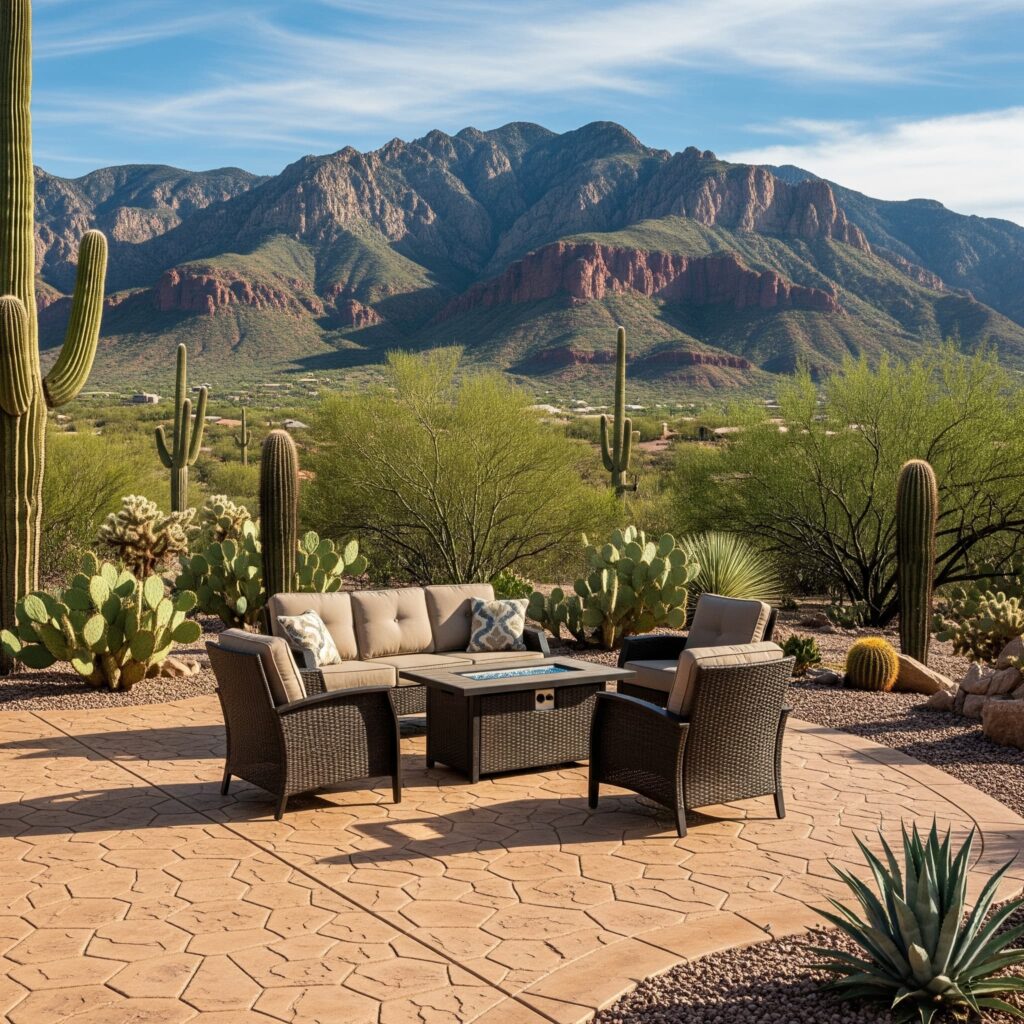
Earth tones are always the most durable colors used in Arizona’s harsh environment. Earth tones have naturally occurring pigments that inhibit UV degradation. The earth tone colors include browns, tans, and terra cotta. Iron oxide pigments found in earth tone colors maintain color stability when exposed to extreme amounts of sunlight. The natural look of earth tone colors complements the Sierra Vista desert landscape, and is the best option available for the highest level of fade resistance. Popular earth tone color selections include: desert sand, canyon brown, and adobe tan that blend perfectly with the Sierra Vista mountain backdrop. Contractors have recommended earth tone colors for decades, based on their performance and durability in Arizona’s desert environment.
Arizona Flagstone Color Patterns and Combinations
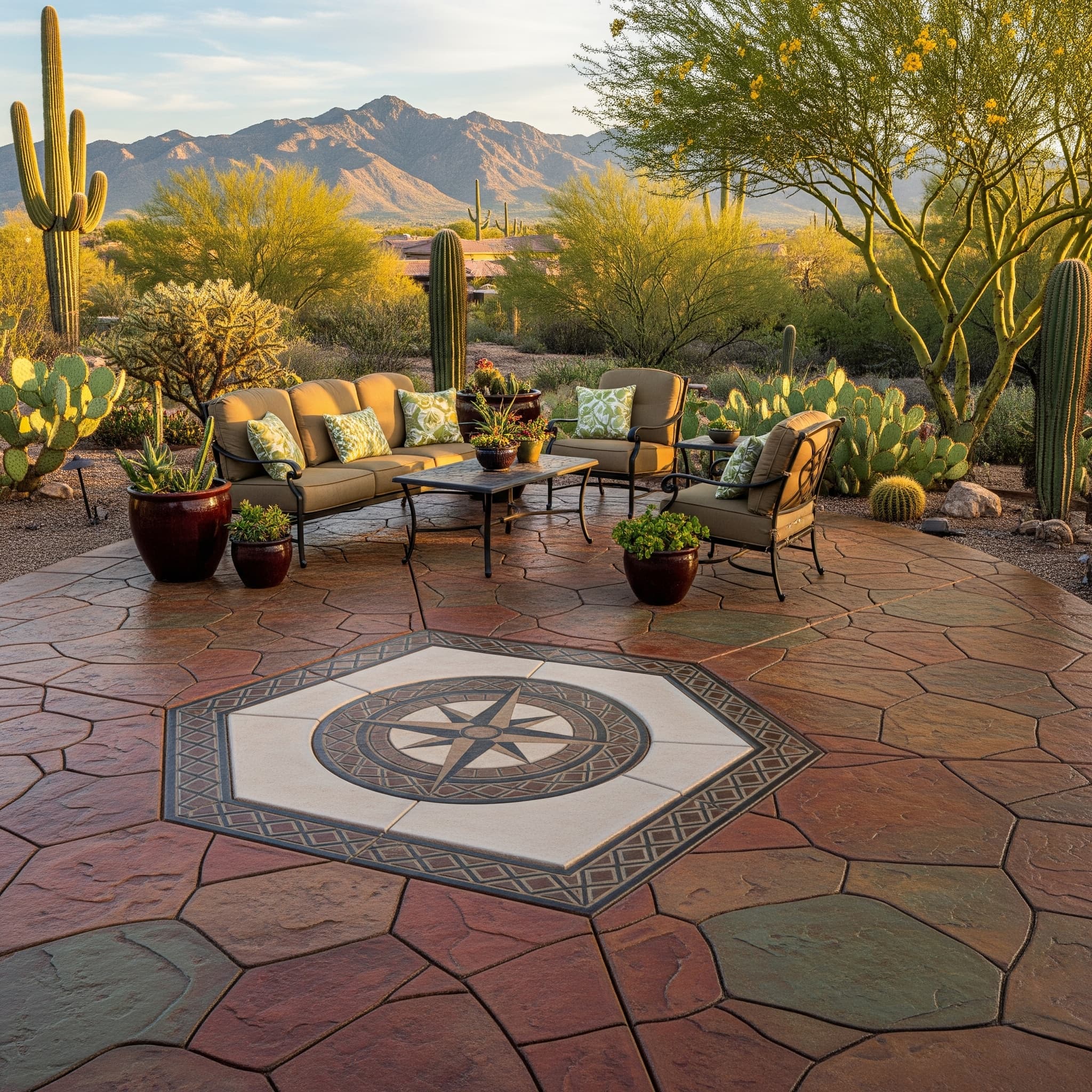
The Arizona flagstone design is the most commonly used design for stamped concrete patios in Sierra Vista, and offers an authentic desert design that is also very durable. This design is most effective when paired with warm sandstone or buff colors that replicate the colors of locally quarried stone. When you use multiple earth tones together in a single installation, you create natural variations in color while maintaining UV stability in all the colors in the design. Many contractors incorporate accent colors such as deep browns or soft grays to give the Arizona flagstone design a finished look. These designs have been installed in numerous locations around Fort Huachuca and other areas in Arizona and have endured decades of sun exposure.
UV Stable Pigment Technologies
Newer generations of UV-stable pigments incorporate the latest advances in chromophore chemistry that inhibit photochemical breakdown caused by intense solar radiation. Contractor-grade integral colors and stains that incorporate these new generation of pigments provide the same color retention for 15-20 years as they do in Arizona’s harsh environment. The pigments used to create these colors include iron oxide, chromium oxide, and titanium dioxide. These pigments penetrate the concrete matrix, so the color is created permanently and cannot be worn away or peeled off like a surface coating. Both Brickform and SureCrete produce their own Arizona-specific color lines utilizing this technology.
Selecting Colors Based on Location
Since different parts of your stamped concrete patio receive different levels of direct sun, you can strategically place colors to optimize longevity. South-facing areas near Garden Canyon receive the most intense UV radiation, and therefore should be painted with light earth tones that reflect rather than absorb the solar radiation. Shaded areas can handle slightly richer colors that will still retain UV resistance. Pool deck areas need to consider the additional UV radiation that is reflected off the water, and therefore, light desert tones are the best color choice. In addition to considering the aesthetic appeal of the colors, you must also consider the durability requirements for each location.
Contractor Grade vs. Retail Grade Color Options
While contractor-grade concrete colorants cost much more than retail-grade colorants, they provide significantly better UV resistance and longevity. Contractor-grade colorants go through rigorous testing in Arizona’s extreme conditions, and come with a warranty for up to 20 years against color loss. Retail-grade stains and colorants often last less than two years in Arizona’s intense UV environment, resulting in costly recoating projects. Contractor-grade installations that use quality materials will maintain their appearance for 15-20 years with regular maintenance. While the upfront cost of premium colorants may seem excessive, the cost savings realized through extended lifespan and decreased maintenance costs will far outweigh the added expense.
Sealers as Final Layer of UV Protection
In order to protect the colors of your stamped concrete patio, you must apply a quality sealer after installation. Sealers that contain UV inhibitors provide a protective barrier that filters out damaging UV radiation while enhancing the color and clarity of the colors on your patio. However, high-end sealers that are polyurethane-based or polyaspartic-based provide greater UV protection, but require a professional to apply them correctly for maximum benefits. Reapplying a sealer to your stamped concrete patio every 2-3 years will provide maximum color protection and extend the life of your patio. Not choosing the correct type of sealer, or failing to reapply a sealer regularly, will result in even UV-stable colors losing their vibrancy quickly.
Recommended Color Combinations for Sierra Vista Homes
Southwestern desert homes located near Brown Canyon Ranch and Ramsey Canyon Preserve benefit from color combinations that complement the natural surroundings. A classic combination includes a sandstone base color with a dark brown border accent that frames the patio area nicely. Two-tone flagstone patterns that combine buff and tan colors create a natural stone appearance that enhances the value of your home. Subtle gray accents pair well with traditional adobe-style homes that are common throughout the Sierra Vista neighborhoods. These time-tested color combinations will provide lasting beauty while maintaining excellent UV stability in the desert environment.
Required Maintenance for Maximum Color Retention
Regardless of the UV stability of the colors applied to your stamped concrete patio, there is required maintenance to be performed to realize maximum lifespan in Arizona’s extreme environment. Cleaning your patio annually removes dirt and debris that can stain the surface and degrade the sealer prematurely. Reapplying a sealer every two to three years, as specified by the manufacturer, will continue to protect the colors from UV damage. If you identify and repair minor cracks or surface damage immediately, you can prevent moisture from entering the patio and causing inconsistent coloration. Adhering to the recommended maintenance schedule for your patio will ensure that your investment in UV-resistant colors will remain vibrant for decades.
Cost-Benefit Analysis for UV-Resistant Colors
There is a higher cost for UV-resistant colors compared to standard colors, typically adding $1-$3 per square foot to basic stamped concrete patio costs. Although the upfront cost of premium UV-resistant colors may be higher, the savings over the life of the patio will far outweigh the additional cost. It is estimated that the cost to recoat a patio with faded colors can range from $8-$12 per square foot, depending upon the method of recoating. The long-term benefits of UV-resistant colors, combined with the savings realized through reduced maintenance costs, demonstrate that the initial investment in UV-resistant colors is beneficial to homeowners.
Timing and Curing for Installation
Curing is a critical component in the process of applying colors to concrete in Arizona’s extreme climate conditions. During the warmer months (summer), installers must implement special methods to control evaporation and maintain a consistent temperature during the curing process to avoid color anomalies. Installations completed in the spring and fall seasons provide the most favorable conditions for installing colored concrete in Sierra Vista, with moderate temperatures and relatively stable weather conditions. By implementing proper curing techniques, installers can ensure that the colors applied to the concrete develop properly and that the colors exhibit the desired level of UV stability. Experienced contractors understand the importance of timing and implement various methods to optimize the curing process for successful installations.
Sierra Vista Concrete Works Expert Guidance for Color Selection
Selecting colors for a stamped concrete patio in Sierra Vista’s harsh desert environment requires knowledge of UV-stable pigment technologies and proven performance history. Our team of experts has extensive experience in selecting and installing fade-resistant color systems that retain their beauty and vibrancy for decades in Arizona’s harsh environment. Sierra Vista Concrete Works uses only professional-grade materials and established color combinations that have been successfully tested in local installations. Sierra Vista Concrete Works provides complete guidance and support to homeowners who want to select the most suitable colors for their stamped concrete patio, and to ensure that their investment in color will deliver long-lasting satisfaction and increased property value in our unique desert environment.
LATEST POSTS